A primary theme of any introductory .NET tutorial is understanding that .NET binaries are "managed," meaning they contain rich metadata that describes classes, methods, and return types. This makes them significantly easier to reverse engineer than native C++ applications.
To follow along with such a tutorial, specific tools are industry standards for inspecting and modifying .NET executables: dotNET Reverse Engineering Tutorial Episode 1.rar
: Recommended for its user-friendly interface and ability to handle complex high-level constructs. Practical Application: "The CrackMe" A primary theme of any introductory
: Using tools like dotPeek or ILSpy to reconstruct high-level C# code from the binary. Practical Application: "The CrackMe" : Using tools like
In the world of software analysis, ".NET Reverse Engineering Tutorial Episode 1" represents the foundational entry point for many aspiring security researchers and developers. This "Episode 1" typically focuses on demystifying the architecture of .NET applications—specifically how high-level code like C# is transformed into rather than direct machine code. The Core Methodology: Decompilation vs. Disassembly
: Often the star of "Episode 1" tutorials, this tool allows you not only to decompile code but also to debug it and edit instructions in real-time.
A primary theme of any introductory .NET tutorial is understanding that .NET binaries are "managed," meaning they contain rich metadata that describes classes, methods, and return types. This makes them significantly easier to reverse engineer than native C++ applications.
To follow along with such a tutorial, specific tools are industry standards for inspecting and modifying .NET executables:
: Recommended for its user-friendly interface and ability to handle complex high-level constructs. Practical Application: "The CrackMe"
: Using tools like dotPeek or ILSpy to reconstruct high-level C# code from the binary.
In the world of software analysis, ".NET Reverse Engineering Tutorial Episode 1" represents the foundational entry point for many aspiring security researchers and developers. This "Episode 1" typically focuses on demystifying the architecture of .NET applications—specifically how high-level code like C# is transformed into rather than direct machine code. The Core Methodology: Decompilation vs. Disassembly
: Often the star of "Episode 1" tutorials, this tool allows you not only to decompile code but also to debug it and edit instructions in real-time.
You won’t have to fiddle with terminal commands to manually mount partitions.
It can be convenient thus resides in the Mac status bar, which helps you quickly and easily mount or unmount the NTFS drives from Mac status bar.
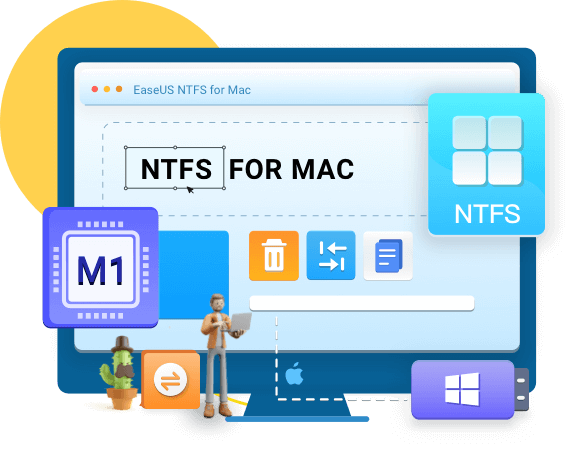
EaseUS NTFS for Mac is a powerful yet easy-to-use utility. It helps you solve the problem that the Mac can't write NTFS drives. Write, edit, copy, move and delete files on Microsoft NTFS volumes. You can do everything with Windows drives on your Mac!
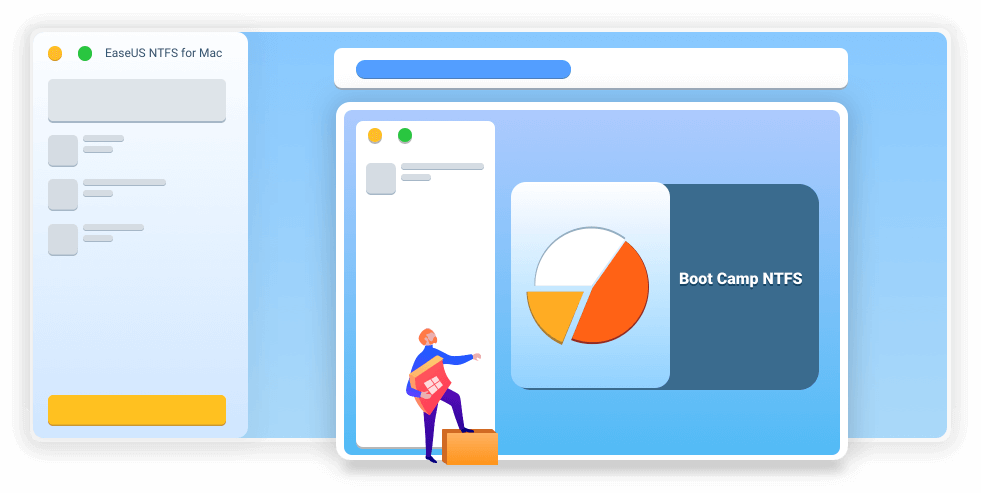
EaseUS NTFS for Mac supports reading and writing external hard drives previously formatted for Windows from other known hard drive manufacturers is an NTFS driver as well.
Microsoft NTFS for Mac by EaseUS is super fast. It means less time waiting for files to save or copy between your external drive and Mac.
Safe data transfer and seamless user experience
It is fully compatible with M1-based Mac devices.
Also, it is compatible
supports macOS Big Sur and older macOS See Specifications

Supported Operating Systems
macOS Big Sur 11 ~ macOS Sierra 10.12 running on Mac mini, MacBook, MacBook Air, Macbook Pro, iMac, iMac Pro and Mac Pro

Supported Files Systems
NTFS, HFS+, APFS, FAT, exFAT

Supported Devices
Hard Drive, External Hard Disk, SSD, USB Drive, Thunderbolt Drive, SD Card, CF Card, etc.

Disk Space
100 MB and above free space