The "Hasbi Rabbi" audio naat stands as one of the most recognizable and beloved pieces of contemporary Islamic devotional art. Centered on the refrain "Hasbi Rabbi Jallallah, Ma Fi Qalbi Ghayrullah" (Sufficient for me is my Lord, the Almighty; there is nothing in my heart but Allah), this naat serves as both a profound declaration of faith and a rhythmic tool for spiritual meditation. Through its evolution from traditional recitation to globally accessible audio formats, it has become a bridge between linguistic heritage and modern spiritual practice.
Furthermore, the "Hasbi Rabbi" audio naat plays a vital role in cultural preservation. For many young Muslims, listening to these recordings is a primary way to engage with the Arabic language and the poetic traditions of their faith. The melodic nature of the audio makes the profound theological concepts accessible to children and adults alike, ensuring that the message of divine sufficiency remains a living part of the community's oral and auditory culture.
In conclusion, "Hasbi Rabbi" is more than just a popular audio track; it is a rhythmic testament to faith. Its enduring popularity stems from its ability to combine deep spiritual truths with a melody that resonates across cultures. As an audio naat, it continues to provide a sanctuary of sound for believers, reinforcing the idea that in every moment of hardship or joy, the presence of the Divine is sufficient.
The following essay explores the spiritual significance and cultural impact of the "Hasbi Rabbi" audio naat within Islamic devotional music. The Spiritual and Cultural Resonance of "Hasbi Rabbi"
In the digital age, the accessibility of audio naats has transformed how this art form is consumed. High-quality studio productions, characterized by layered vocals and professional sound engineering—often without the use of musical instruments to adhere to specific religious interpretations—have expanded the reach of "Hasbi Rabbi." Famous reciters like Sami Yusuf helped popularize the multilingual approach, incorporating verses in English, Urdu, Turkish, and Arabic. This inclusivity has allowed the naat to transcend geographic boundaries, making it a staple in households across the Middle East, South Asia, and the Western diaspora.
The core strength of the naat lies in its lyrical simplicity and the universal truth it conveys: the absolute sufficiency of God. By repeating the phrase "Hasbi Rabbi," the listener is reminded of the concept of Tawakkul (reliance on God), which is a cornerstone of Islamic theology. Audio versions often incorporate the Salawat (blessings upon the Prophet Muhammad), weaving together the love for the Creator with the veneration of His Messenger. This dual focus allows the audio naat to function as a form of dhikr (remembrance), helping listeners find peace amidst the anxieties of modern life.

Experience the power of our AI-powered keyboard. Type Assamese faster than ever, even if you don't know the script!
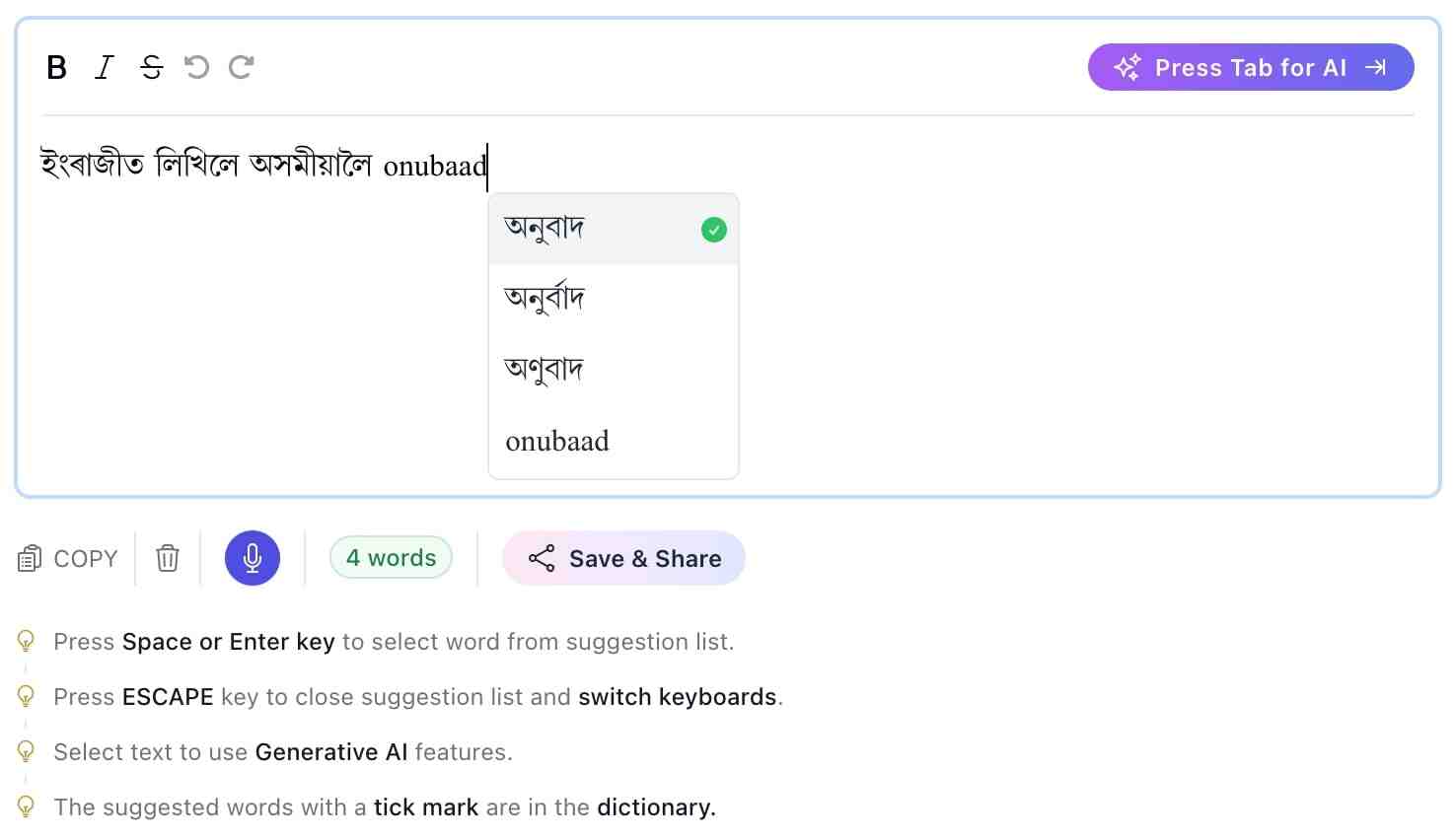
Type Assamese words using English letters and get instant Assamese result.
Get real-time spelling corrections as you type for error-free writing.
Choose from smart AI suggestions to speed up your typing and improve accuracy.
No prior experience needed. Start writing Assamese in minutes!
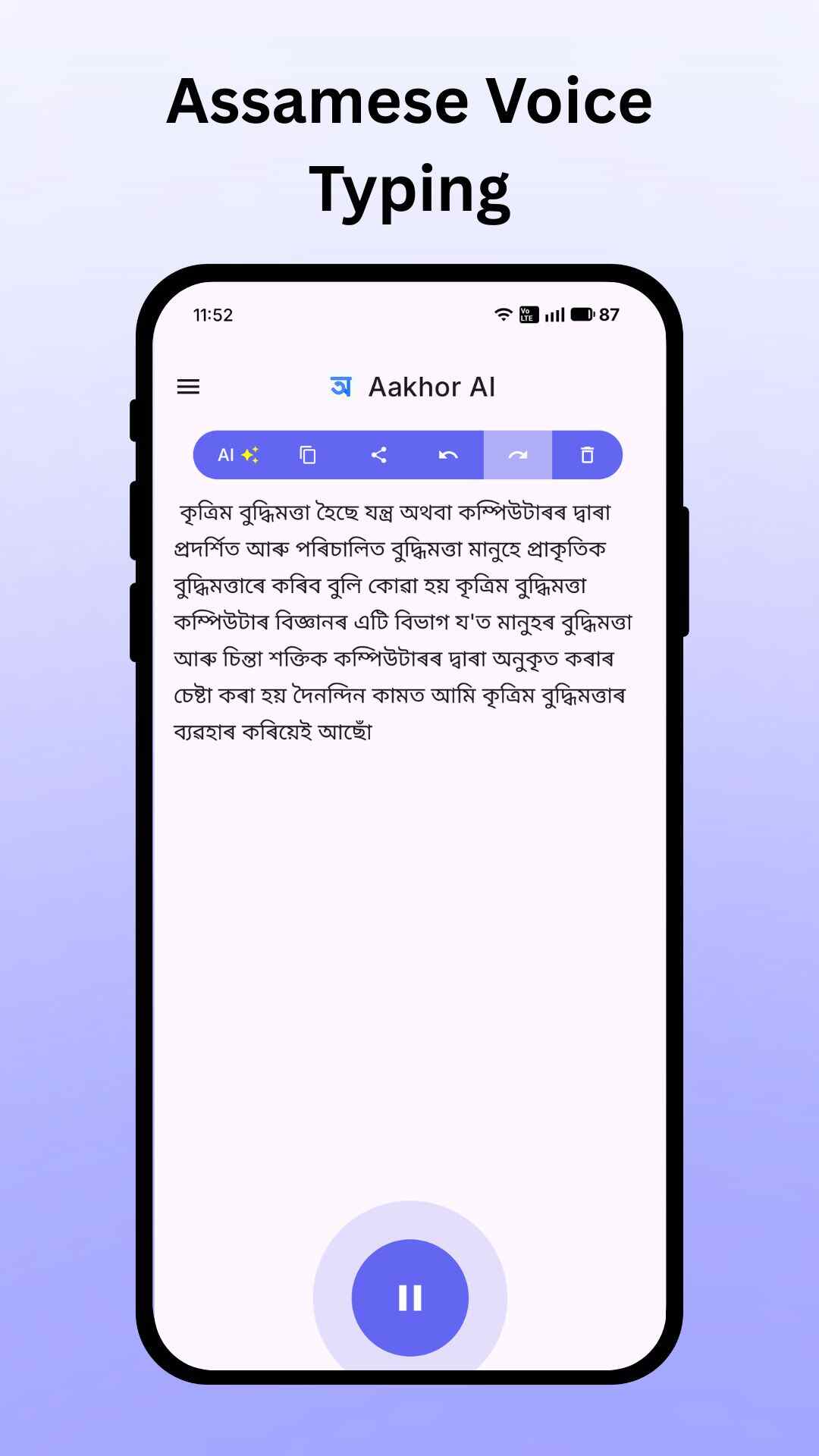
Type Assamese effortlessly by speaking. Our AI voice typing feature converts your speech to Assamese text in real time, making writing faster and more accessible for everyone.
Use Audiorelay mobile app to use your phone as a microphone for desktop
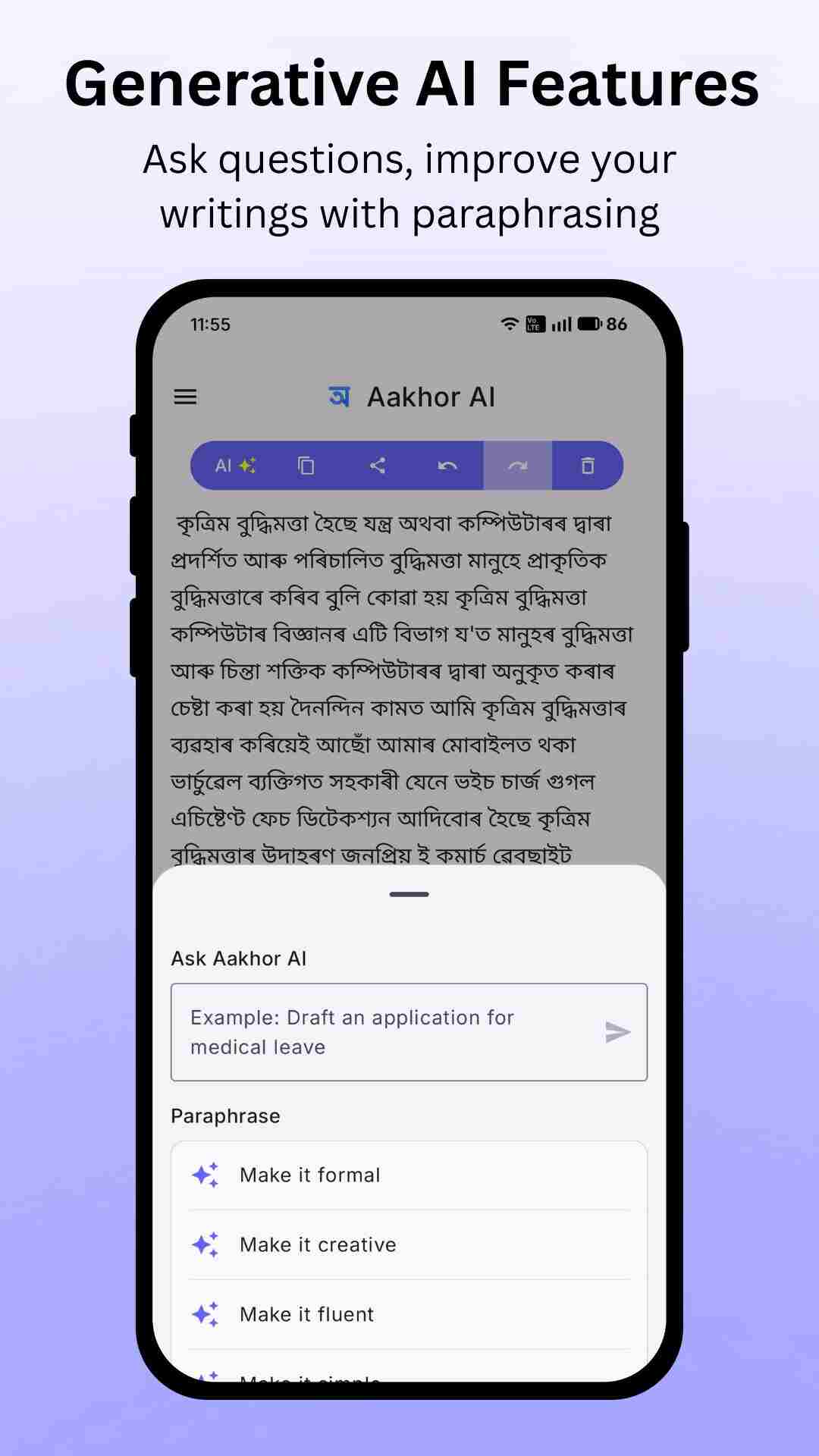
Experience seamless Assamese typing on your phone with our AI-powered mobile app. Enjoy voice typing and smart suggestions for a faster, easier writing experience.
Speak and see Assamese text appear instantly—no typing needed.
Get instant word suggestions as you type for faster, error-free writing.
Get advantage of our all-in-one toolkit
Save important thoughts instantly and access them from anywhere.
Easily share your notes with anyone.
Find word meanings, synonyms, and usage with our smart dictionary.
Utilize the power of our tools right from your browser.
Trained on millions of Assamese words, Aakhor AI lets you write blazing fast, even with zero typing experience.
The "Hasbi Rabbi" audio naat stands as one of the most recognizable and beloved pieces of contemporary Islamic devotional art. Centered on the refrain "Hasbi Rabbi Jallallah, Ma Fi Qalbi Ghayrullah" (Sufficient for me is my Lord, the Almighty; there is nothing in my heart but Allah), this naat serves as both a profound declaration of faith and a rhythmic tool for spiritual meditation. Through its evolution from traditional recitation to globally accessible audio formats, it has become a bridge between linguistic heritage and modern spiritual practice. Hasbi Rabbi Audio Naat
Furthermore, the "Hasbi Rabbi" audio naat plays a vital role in cultural preservation. For many young Muslims, listening to these recordings is a primary way to engage with the Arabic language and the poetic traditions of their faith. The melodic nature of the audio makes the profound theological concepts accessible to children and adults alike, ensuring that the message of divine sufficiency remains a living part of the community's oral and auditory culture. The "Hasbi Rabbi" audio naat stands as one
In conclusion, "Hasbi Rabbi" is more than just a popular audio track; it is a rhythmic testament to faith. Its enduring popularity stems from its ability to combine deep spiritual truths with a melody that resonates across cultures. As an audio naat, it continues to provide a sanctuary of sound for believers, reinforcing the idea that in every moment of hardship or joy, the presence of the Divine is sufficient. Furthermore, the "Hasbi Rabbi" audio naat plays a
The following essay explores the spiritual significance and cultural impact of the "Hasbi Rabbi" audio naat within Islamic devotional music. The Spiritual and Cultural Resonance of "Hasbi Rabbi"
In the digital age, the accessibility of audio naats has transformed how this art form is consumed. High-quality studio productions, characterized by layered vocals and professional sound engineering—often without the use of musical instruments to adhere to specific religious interpretations—have expanded the reach of "Hasbi Rabbi." Famous reciters like Sami Yusuf helped popularize the multilingual approach, incorporating verses in English, Urdu, Turkish, and Arabic. This inclusivity has allowed the naat to transcend geographic boundaries, making it a staple in households across the Middle East, South Asia, and the Western diaspora.
The core strength of the naat lies in its lyrical simplicity and the universal truth it conveys: the absolute sufficiency of God. By repeating the phrase "Hasbi Rabbi," the listener is reminded of the concept of Tawakkul (reliance on God), which is a cornerstone of Islamic theology. Audio versions often incorporate the Salawat (blessings upon the Prophet Muhammad), weaving together the love for the Creator with the veneration of His Messenger. This dual focus allows the audio naat to function as a form of dhikr (remembrance), helping listeners find peace amidst the anxieties of modern life.
Contact us for enterprise level solutions
Contact us