Apr 29, 2023
Feb 22, 2021
Jun 22, 2020
On a personal level, carrying "nothing" can be a heavy burden. It represents the moment of realization after a long pursuit—whether of a dream, a relationship, or a career—where the hands are opened to reveal emptiness. Yet, there is a certain honesty in this state. To admit to a "hand full of nothing" is to strip away pretension. It is a moment of radical clarity that allows for a genuine new beginning, unencumbered by the "thingness" of past failures. Conclusion
In Portuguese literature, specifically the collection Uma mão cheia de nada outra de coisa nenhuma by Irene Lisboa, the phrase serves as a gateway to the fantastic. For children and young readers, it introduces the concept of the "void" not as a tragedy, but as a space where the imagination must take over. When the physical world offers "nothing," the internal world must provide the "something." kinota_mao_cheia_de_nada
The phrase "Uma mão cheia de nada e outra de coisa nenhuma" is more than just a clever Portuguese idiom; it is a profound commentary on the human condition. While literally describing someone who possesses nothing, its metaphorical weight often leans toward the irony of expectation versus reality. Whether found in the children’s stories of Irene Lisboa or used in legal and social critiques, the expression highlights a universal truth: sometimes, the most profound thing we carry is the absence of what we sought. 1. The Paradox of Potential On a personal level, carrying "nothing" can be
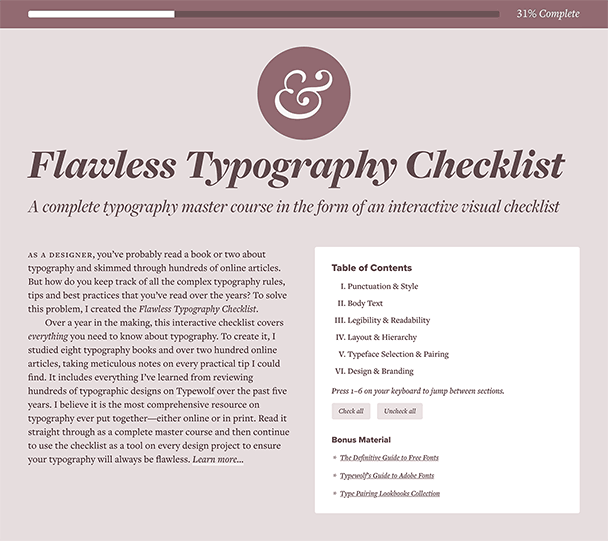
A typography master course that doubles as an interactive visual reference that helps you achieve flawless type on every design project
*If you sign up for a Creative Cloud plan to access Adobe Fonts, or if you subscribe to Monotype Fonts, I will receive a commission. If you find Typewolf useful, please use these links as a way to show your support. ♥