Downloads

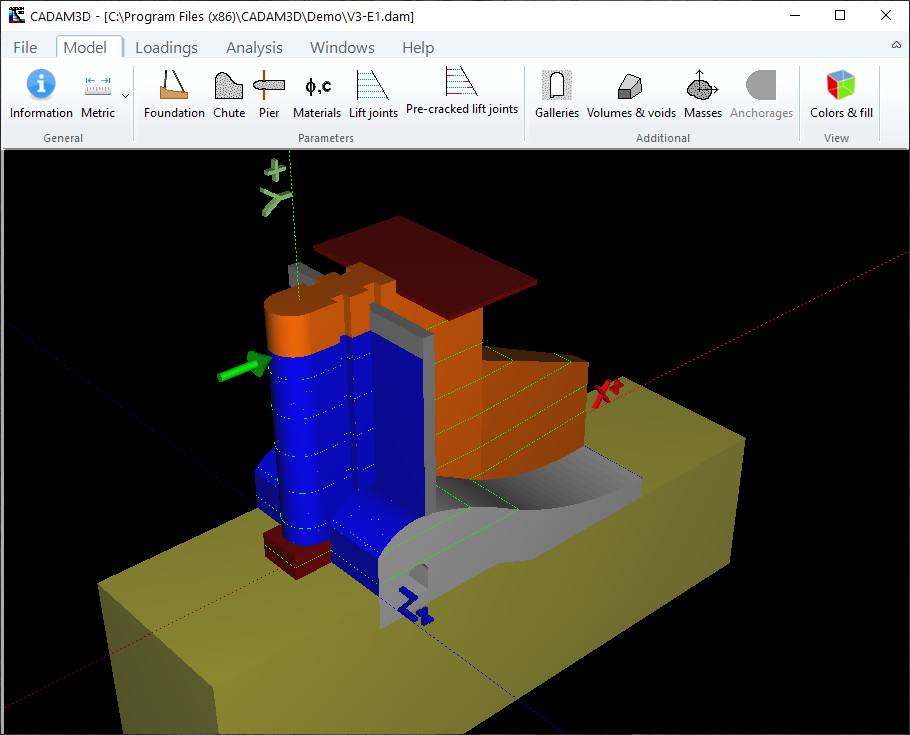
CADAM3D is a user-friendly software based on the gravity method originally developed for one of the world biggest concrete dam owner, Hydro-Quebec, and for Dams and Hydrology of the Quebec Ministry of Environment (Quebec's legislator for dam safety). CADAM3D is fully functional and is intensively used by Hydro-Quebec since 2005. To our knowledge, no other software similar to CADAM3D is available at this time.
If you perform stability analyzes of concrete hydraulic structures, this software will allow you to perform them much faster and more efficiently. If you are interested in this type of software and would like to try CADAM3D for free, please click on the button "Contact us for a free trial of CADAM3D" to send us a message. mojo1201-7.mp4
Once you describe the video's content or the purpose of the essay, I can help you draft a structured analysis covering its visual language, technical execution, and audience impact.
: Is this for a media studies class, a marketing analysis, or a technical review?
To provide a "proper essay" on , I would Based on the filename pattern, this likely refers to a file exported from Mojo , a popular social video and content creation app used for making Instagram Reels, TikToks, and marketing materials.
Once you describe the video's content or the purpose of the essay, I can help you draft a structured analysis covering its visual language, technical execution, and audience impact.
: Is this for a media studies class, a marketing analysis, or a technical review?
To provide a "proper essay" on , I would Based on the filename pattern, this likely refers to a file exported from Mojo , a popular social video and content creation app used for making Instagram Reels, TikToks, and marketing materials.
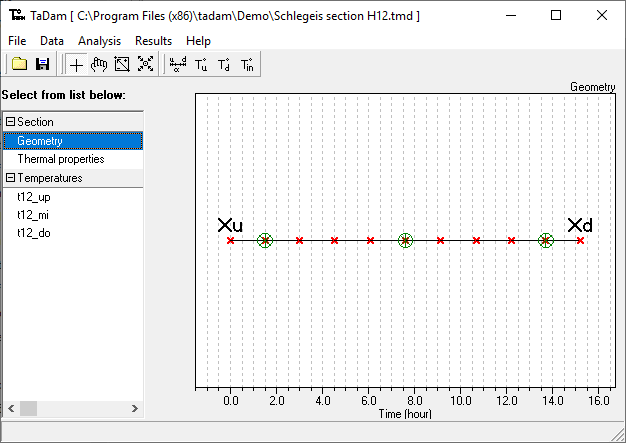
TADAM (Thermal Analysis of concrete DAMs) software employs a new frequency-domain solution technique to solve the 1D thermal transfer problem, allowing the calculation of temperature histories in a concrete dam section.
The direct solution calculates the evolution of the temperature distributions from the temperature histories of the upstream and downstream faces. The inverse solution uses temperature histories, measured inside the section, in order to calculate the temperature fields at the external faces, while taking into account the thermal wave attenuation effects and the phase angles along the section.
TADAM is developed in a university context and has no commercial aspect.