
pull that shemale cock
While the 1969 Stonewall Uprising is frequently cited as the birth of the modern movement, it was the actions of transgender women of color—most notably Marsha P. Johnson and Sylvia Rivera —that catalyzed the shift from quiet assimilation to defiant visibility. Before Stonewall, the 1966 Compton’s Cafeteria Riot in San Francisco saw trans women and "street queens" rising up against police harassment. These early acts of resistance were born from the fact that transgender individuals, often unable to hide their identities, bore the brunt of state-sanctioned violence. Their courage provided the blueprint for the liberation movements that followed, demanding a world where gender performance was not a crime.
The transgender community is not an "add-on" to LGBTQ culture; it is its foundation. From the front lines of the first riots to the runways of the modern ballroom scene, transgender individuals have redefined what it means to live authentically. As the movement continues to evolve, the strength of LGBTQ culture will depend on its ability to honor its transgender pioneers and ensure that the liberation sought at Stonewall is extended to everyone, regardless of their gender identity or expression.
It was not until the late 1990s and early 2000s that the acronym firmly solidified to include the "T." This shift reflected a growing realization that the oppression of gay men and lesbians is rooted in the same rigid gender norms that target transgender people. Today, the concept of "intersectionality"—a term coined by Kimberlé Crenshaw—is vital to LGBTQ culture, acknowledging that a transgender person's experience is shaped not just by gender identity, but by race, class, and ability. pull that shemale cock
Transgender culture has profoundly influenced mainstream and queer aesthetics. Nowhere is this more visible than in the history of "Ballroom Culture." Originating in New York City’s Black and Latinx communities, balls became a sanctuary for transgender individuals to express their gender identities through "realness" and performance. This subculture introduced the world to "voguing" and much of the slang that currently dominates pop culture—terms like "slay," "spilling tea," and "shades."
Despite increased media representation (the "Transgender Tipping Point"), the community faces significant modern challenges. High rates of violence against Black transgender women, legislative attacks on gender-affirming healthcare, and the rise of exclusionary ideologies within some feminist and queer circles remain urgent issues. While the 1969 Stonewall Uprising is frequently cited
The relationship between the transgender community and the broader LGBTQ collective has not always been seamless. During the 1970s and 80s, a push for "respectability politics" led some gay and lesbian organizations to distance themselves from transgender people, fearing that gender non-conformity would hinder the progress of marriage equality or workplace protections.
The following essay explores the historical, social, and cultural intersections of the transgender community within the broader LGBTQ movement, highlighting their unique contributions and the ongoing struggle for visibility and equality. These early acts of resistance were born from
The history of the LGBTQ (Lesbian, Gay, Bisexual, Transgender, and Queer) movement is not a single narrative but a tapestry of overlapping struggles and shared triumphs. At the heart of this tapestry is the transgender community—a group that has often been the vanguard of radical social change while simultaneously fighting for recognition within the very culture they helped build. Understanding the "T" in LGBTQ requires looking beyond modern terminology to see a long legacy of gender non-conformity that has shaped the aesthetic, political, and social foundations of queer culture.

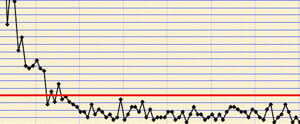
The first step to help ensure the safety of you and your family’s health and safety is to have your home tested for radon. At St. Louis Radon, our professional testers deploy the latest in computerized electronic real-time radon monitoring technology to provide you with a comprehensive report, including a complete visual graph of radon level data points as recorded over a 48-hour sampling period.
Learn More About Testing
If testing indicates levels of radon that require action, our team of engineers and technicians will design and install a custom radon mitigation system to safely and effectively redirect radon and other soil gasses out of your home. We also take additional measures to seal and close other possible breaches in the foundation that could let soil gasses into the through cracks or drain tiles systems.
Learn More About Mitigation
With new home construction projects, it is crucial to determine the level of radon that may be present in the soil before the home is built. It’s also critical to have the new home retested for potential radon concentrations immediately following occupancy. We also highly recommend installing an Active Dampness Control System (ADC) with every new build.
Learn More About New Construction